Essaouira, the former Mogador, is a coastal city like no other: a UNESCO medina perched on the Atlantic, an authentic fishing port, the birthplace of Gnaoua music and a paradise for kitesurf enthusiasts. A city that lives to the rhythm of wind and tides.
From Mogador to Essaouira: a history of trading posts
Essaouira bears the imprint of several civilisations. The Phoenicians stopped there as early as the 6th century BC; the Romans established purple dye workshops; the Portuguese built a trading post in the 16th century. However, it was the Alaouite sultan Mohammed III who, in 1765, had the current city built to plans by French architect Théodore Cornut, giving it its chequered layout unique in Morocco.
A city of trade and tolerance, Essaouira was for centuries a crossroads between Europe, sub-Saharan Africa and the Arab world. Jews, Berbers, Arabs, Europeans and sub-Saharan merchants cohabited harmoniously. This cosmopolitan history is still felt in the architecture blending French, Portuguese and Arab-Andalusian influences.
The Medina and the Skala, jewels of the Atlantic
Listed as a UNESCO World Heritage Site in 2001, the Medina of Essaouira is distinguished by its white walls and blue details, its breezy alleyways and lively souks where craftsmen of thuya — an aromatic wood specific to the region — carve strikingly beautiful objects. The Skala (fortified bastions), with their cannons pointing towards the Atlantic, offer unforgettable sunsets.
Essaouira's artisanal fishing port is one of the most lively in Morocco. Each morning, the blue boats return laden with sardines, sea bream and squid that can be bought directly from the fishermen and then grilled on the spot. The smell of grilled fish and iodine mixed with the salty Atlantic air is one of the emblematic fragrances of the city.
Gnaoua music, the soul of Essaouira
Gnaoua music was born from the fusion between the musical traditions of sub-Saharan African slaves brought to Morocco and local Arab-Berber influences. Listed as UNESCO intangible heritage, it blends ritual chants, percussion (krakebs, guembri) and trance dances with spiritual and therapeutic purposes.
Each June, Essaouira hosts the Gnaoua and World Music Festival, one of the largest music festivals on the African continent, attracting more than 500,000 spectators and musicians from around the world. The city then vibrates with a unique energy, and free outdoor concerts follow one another on Place Moulay Hassan and the ramparts.
Kitesurfing and water activities
Nicknamed the 'Wind City of Africa', Essaouira benefits from regular trade winds reaching 30 to 40 km/h, making it one of the world's best destinations for kitesurfing and windsurfing. Essaouira's 10-kilometre-long beach welcomes hundreds of practitioners who enjoy ideal conditions from May to September.
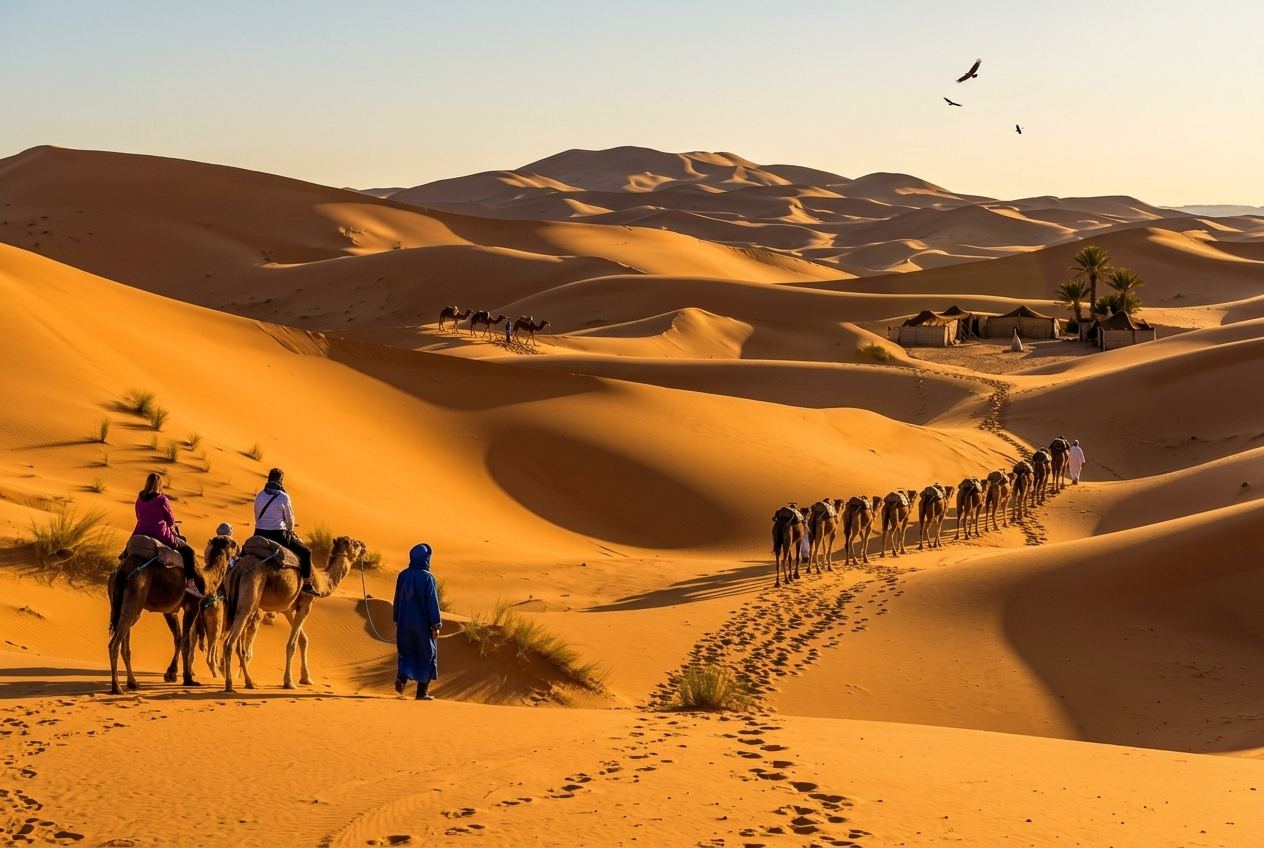
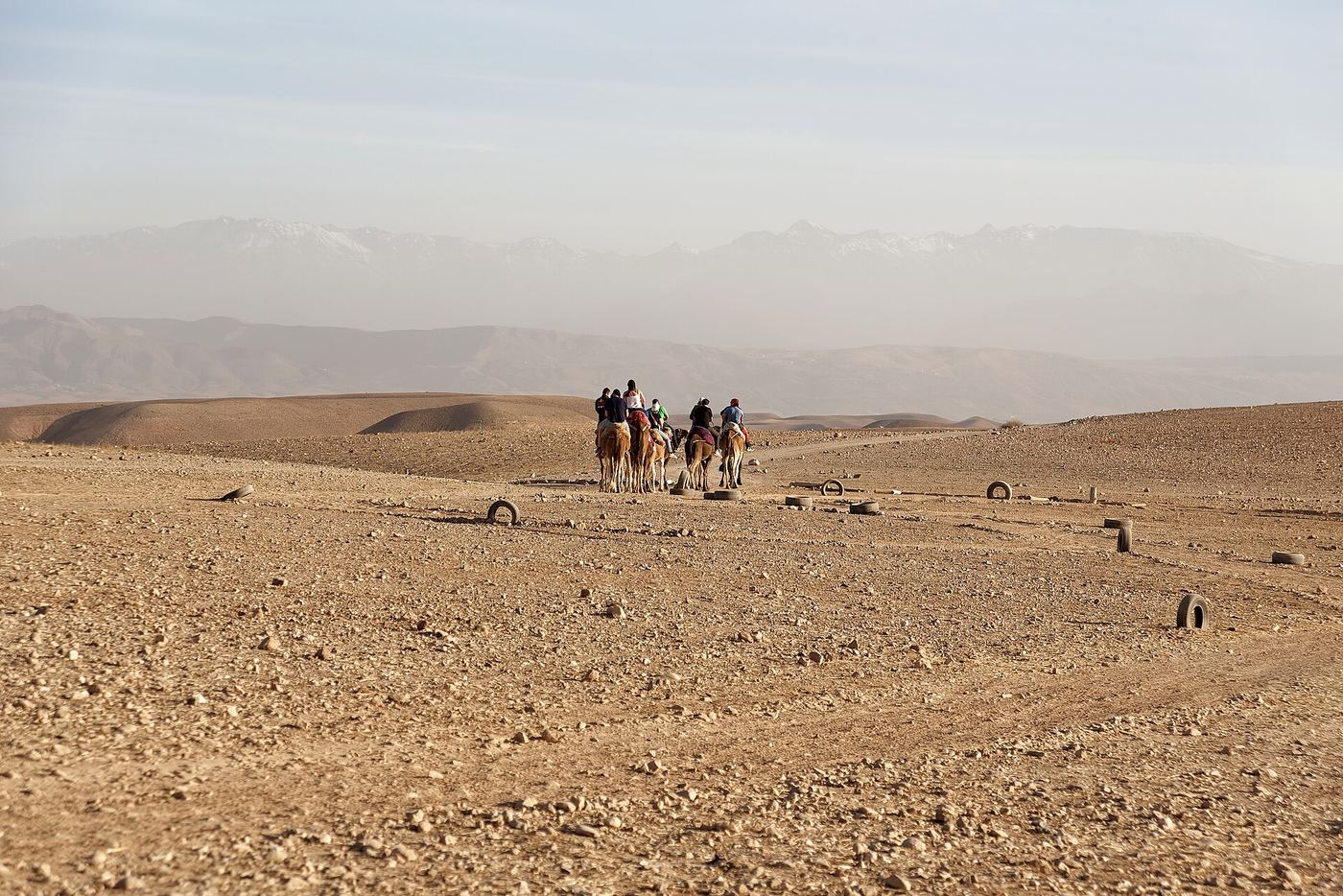
For non-sporty visitors, Essaouira beach remains a magical place to walk at sunset, watch the horseback fishermen (a unique local tradition) or simply sit on the rocks and listen to the sound of waves crashing against the ramparts. Horsemen also offer horse or camel rides on the beach.
Gastronomy and crafts of Essaouira
Essaouira's cuisine is dominated by fresh Atlantic seafood and fish. Port restaurants offer fish tagines with local spices, prawn brochettes and remarkably fresh seafood platters. Don't miss tasting grilled sardines on charcoal directly at the port for a few dirhams — a poor man's feast that surpasses many a starred restaurant.
Essaouira's crafts are dominated by the work of thuya, a rare aromatic juniper that grows in the region. Craftsmen produce boxes, trays, frames and musical instruments of remarkable quality, with inlays of lemon wood and mother-of-pearl. Argan oil, produced in the surrounding forests, is also available in quantity — cosmetic or food grade — at unbeatable prices.
Want to live this trip?
Our driver-guides organise everything for you. Free quote in minutes.
Free quote on WhatsApp